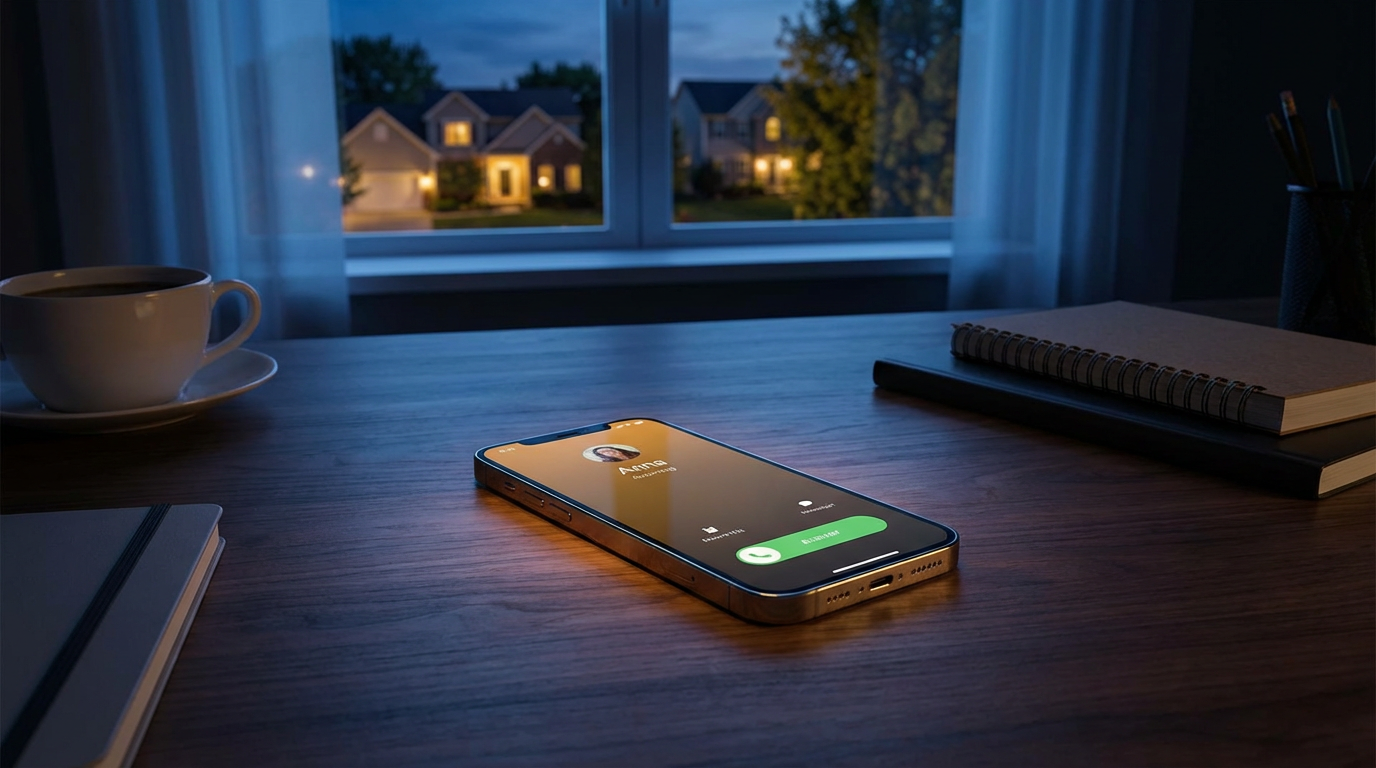
It is 9:47 PM on a Tuesday. A homeowner’s furnace just stopped working. She picks up her phone, Googles “HVAC repair near me,” and calls the first three companies. Company one goes to voicemail. Company two goes to voicemail. Company three picks up on the first ring, answers her questions, and books a service call for 8 AM the next morning.
Companies one and two will never hear from her. She is not going to call back in the morning. She already found someone.
This is not a hypothetical. This is happening to your business right now.
The After-Hours Problem in Numbers
The data on this is not ambiguous. Between 35% and 50% of all inbound service calls arrive outside standard business hours. That means evenings, weekends, and holidays. For emergency-driven industries like HVAC, plumbing, and electrical, the number skews even higher.
Here is what happens when those calls go unanswered:
- 85% of callers who reach voicemail will not leave a message. They hang up and call the next company.
- 78% of the time, the first business to respond wins the job. Not the best business. Not the cheapest. The first one.
- The average missed call costs a service business $300 to $1,200 depending on the industry and job type.
If your business misses five after-hours calls per week and each call is worth an average of $500, that is $10,000 per month in lost revenue. Not because your service is bad. Not because your prices are too high. Because nobody picked up the phone.
Why Voicemail and Answering Services Do Not Solve This
Most business owners know they have an after-hours problem. The solutions they try usually fall into two categories, and neither one actually works.
Voicemail is a dead end. The data is clear: the vast majority of callers will not leave a message. They are not going to wait for you to call back tomorrow. They need help now, and whoever answers now gets their money.
Traditional answering services are marginally better, but they introduce their own problems. The person answering is reading from a script, cannot actually answer questions about your services, cannot check your real-time calendar availability, and often gets basic details wrong. The caller can tell it is not your company, and the experience feels impersonal. Worse, you are paying $1 to $3 per minute whether the caller turns into a customer or not.
Neither option does what actually needs to happen: pick up instantly, sound competent, answer the caller’s real questions, qualify whether they are a good lead, and book them directly into your calendar.
The System: AI Voice Agent for After-Hours Revenue Capture
Here is the system that eliminates after-hours revenue loss entirely. Every component is designed to replicate what your best employee would do if they never slept.
Step 1: Instant Call Answering
When your business line rings outside your configured hours, the AI voice agent picks up within one second. Not one ring. Not three rings. One second. The caller hears a natural, human-sounding voice that greets them by your company name and asks how it can help.
This is not a phone tree. There are no “press 1 for sales, press 2 for support” menus. The caller simply speaks naturally, and the AI responds conversationally. The voice itself is indistinguishable from a real person. Callers routinely have full conversations without realizing they are speaking to AI. That matters, because the moment a caller feels like they are talking to a robot, they hang up.
Step 2: Intelligent Conversation and Qualification
The AI does not just take a message. It has a real conversation. It knows your services, your service area, your pricing ranges, and your availability. When the caller says “my AC stopped working and it is 95 degrees in my house,” the AI can respond with empathy, confirm the service area, ask clarifying questions about the unit, and explain what happens next.
During this conversation, the AI is quietly qualifying the lead. Is this person in your service area? Do you offer the service they need? Is this an actual prospect or a solicitation call? Only qualified leads move to the next step.
The AI also handles the questions that trip up answering services: “Do you work on Carrier units?” “What is your service call fee?” “Can someone come out tomorrow morning?” Because the AI is trained on your specific business information, it gives accurate answers instead of the generic “someone will get back to you” that kills caller confidence.
Step 3: Direct Calendar Booking
Once the caller is qualified, the AI checks your real-time calendar availability and offers the next open slot. The caller confirms, and the appointment is booked. No back-and-forth texts the next morning. No phone tag. The appointment is locked in before the caller hangs up.
This is the step that separates an AI agent from every other after-hours solution. Voicemail cannot book. Answering services cannot see your calendar. A chatbot on your website cannot talk to someone who picked up the phone. The AI voice agent does all three in a single conversation that takes less than three minutes.
Step 4: Instant Notification
The moment an appointment is booked, you receive a notification with the caller’s name, contact information, the service they need, and when they are booked for. When you wake up in the morning, you do not find missed calls. You find booked appointments.
Your team also gets a complete transcript of the conversation, so they know exactly what the customer said, what questions were asked, and what was promised. No ambiguity. No lost context. The technician who shows up for the appointment knows exactly what to expect.
Step 5: Follow-Up Automation
If the caller hangs up before booking, or if the call drops, the system automatically sends a follow-up text within 60 seconds: “Hi, this is [Your Company]. We noticed you just called. We are available to help. Would you like to schedule a time?” This recovers leads that would otherwise disappear.
If the caller does not respond to the text, a second follow-up goes out the next morning during business hours. For high-value service categories like roofing, HVAC replacement, or legal consultations, a third touchpoint can be added: a brief email with your company overview and a direct booking link. The goal is simple. No lead that showed enough interest to pick up the phone should ever be lost because of a dropped call or a moment of hesitation.
What Good Looks Like: The Benchmarks
When this system is running correctly, here is what you should expect:
- Zero missed calls. Every single call is answered, 24 hours a day, 365 days a year.
- Call-to-booking conversion rate of 25% to 40%. Not every caller is a qualified lead, but every qualified lead gets booked.
- Average response time under 1 second. Faster than any human receptionist.
- Morning briefing with booked appointments. You start every day knowing exactly who is coming and what they need.
- Support for 65+ languages. If a Spanish-speaking customer calls, the AI handles the conversation in Spanish without missing a beat.
The Revenue Impact
Let us run the math on a mid-size HVAC company:
- Missed after-hours calls per week: 8
- Average job value: $600
- Caller-to-booking conversion rate with AI: 30%
- New bookings per week: 2.4
- Monthly recovered revenue: $5,760
Over 12 months, that is nearly $70,000 in revenue that was previously walking out the door every night. And that number only accounts for the first job. Many of those customers become repeat clients, refer friends, and leave Google reviews that generate even more inbound calls.
Self-Assessment: Is Your Business Leaking After-Hours Revenue?
Answer these five questions honestly:
- How many calls per week go to voicemail or are missed entirely?
- What happens when someone calls your business at 8 PM on a Wednesday?
- Do you know how many leads you lost last month because nobody answered?
- When a caller does leave a voicemail, how long does it take your team to call back?
- How many of your competitors answer calls after hours?
If the answers make you uncomfortable, that is the point. Every night your phone goes unanswered is a night your competitors are booking the jobs that should have been yours.
The Bottom Line
After-hours calls are not a minor leak. For most service businesses, they represent the single largest source of lost revenue. The fix is not complicated. An AI voice agent answers every call, qualifies every lead, and books every appointment while your team is off the clock. You can build this system yourself with enough engineering resources, or you can have it deployed and running in 21 days. Either way, every night you wait is money you are giving to the company down the street.