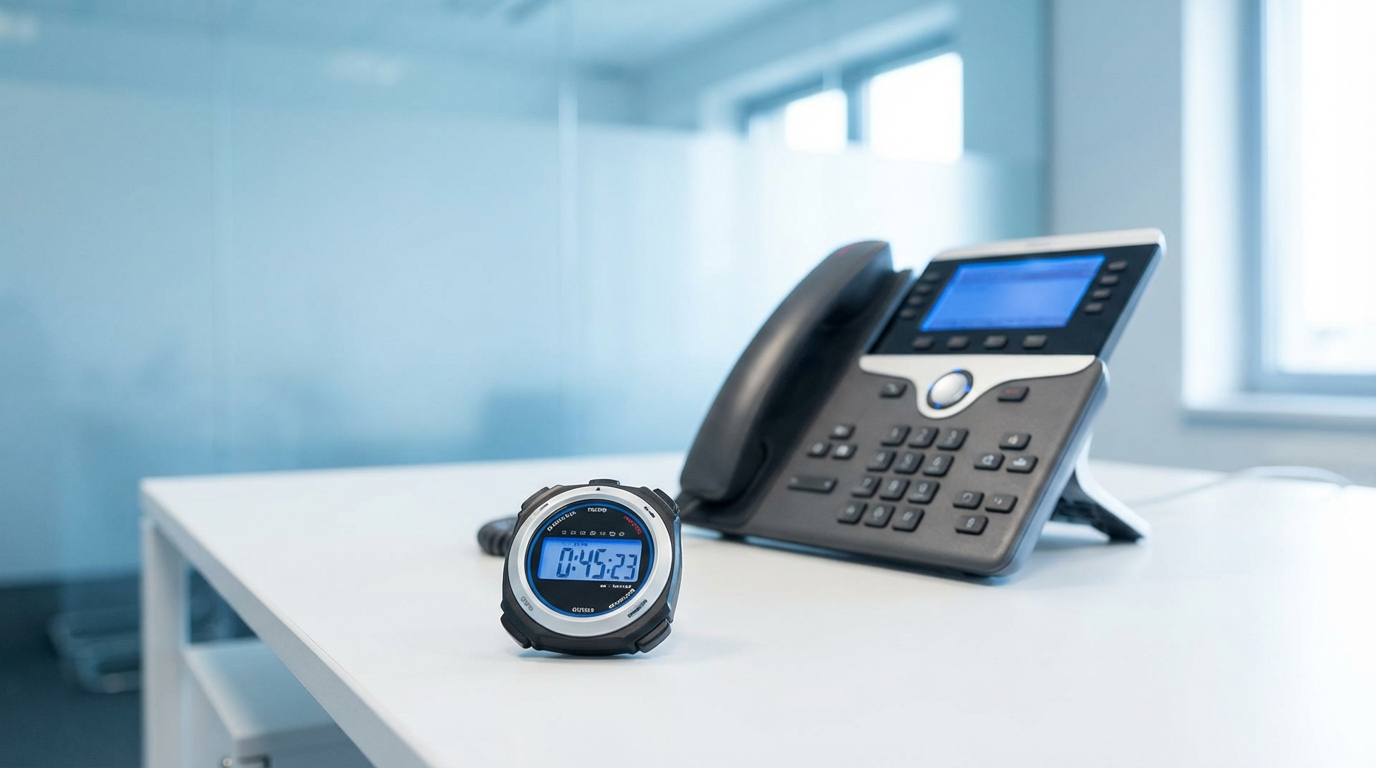
A homeowner submits a request for a roofing estimate through Angi. Within three seconds, that request goes out to four roofing companies. All four companies have good reviews. All four are qualified. All four charge similar prices. But only one of them will win the job.
It will be whichever company calls back first.
This is not speculation. The research is definitive. The first company to respond to a new lead wins the job 78% of the time. Not the company with the most reviews. Not the cheapest bid. The first one to make contact.
And yet, the average service business takes over four hours to respond to a new lead. By then, the homeowner has already talked to two competitors, gotten a quote from one of them, and mentally committed to moving forward.
Speed is not a nice-to-have. Speed is the entire game.
The Data: Why Response Time Is the Single Biggest Lever
The numbers on this are not subtle:
- Leads contacted within 60 seconds are 391% more likely to convert than leads contacted after two minutes.
- After five minutes, the odds of qualifying a lead drop by 80%.
- After 30 minutes, you are 21 times less likely to qualify the lead than if you had called in the first minute.
- The first responder wins 78% of the time, regardless of price, reviews, or brand recognition.
Now think about what this means for your cost per lead. If you are spending $75 per lead on Google Ads and your team takes 45 minutes to call back, you are effectively paying $75 to lose that lead to whoever calls first. You would get better results setting that money on fire and answering the phone faster.
Why Manual Speed-to-Lead Fails
Most business owners understand that faster response times win more jobs. The problem is execution. Here is why manual approaches do not work at the speed the market demands:
Your team is busy. Your office manager is on another call. Your techs are on job sites. Your sales rep is in a meeting. The lead notification sits in an inbox, pinging on a phone nobody is looking at.
Leads come from multiple sources. Your website form, Google Ads landing page, Facebook lead form, Angi, HomeAdvisor, Thumbtack, Yelp, and direct phone calls. Nobody is monitoring all of these simultaneously.
Peak lead times are unpredictable. Three leads might come in during a 10-minute window, and then nothing for four hours. Staff cannot stay on high alert indefinitely.
Humans fatigue. Even the most dedicated employee will let a lead sit for 15 minutes during a busy day. Over the course of a month, those 15-minute delays across dozens of leads add up to thousands in lost revenue.
The only system that responds to every lead, from every source, in under 60 seconds, 100% of the time, is one that does not rely on humans to initiate the first contact.
The System: AI-Powered Speed-to-Lead
Here is how a properly configured speed-to-lead system works:
Step 1: Unified Lead Intake
Every lead source, whether website forms, ad platforms, directories, or social media, feeds into a single system. When a new lead arrives from any source, the system recognizes it instantly and triggers the response sequence. No monitoring required. No human intervention needed at this stage.
Step 2: Sub-60-Second AI Callback
Within 60 seconds of the lead arriving, the AI calls the prospect. The conversation sounds like this:
“Hi, this is [Your Company Name]. I saw you were looking for [service type]. I would love to help you out. Can I ask a couple of quick questions to make sure we are a good fit?”
The prospect hears a natural, conversational voice. There is no hold music, no phone tree, and no “someone will call you back.” They are already talking to your company before they have finished shopping.
Step 3: Real-Time Lead Qualification
During the call, the AI qualifies the lead with the questions that matter for your business:
- What service do you need?
- Where is the property located?
- When do you need the work done?
- Have you gotten other estimates?
This is not a robotic questionnaire. The AI responds naturally to the prospect’s answers, handles objections, and provides helpful information about your services. If the prospect asks “how much does a roof replacement cost?” the AI gives a useful range based on the parameters you have configured.
Step 4: Instant Calendar Booking
Once the prospect is qualified, the AI checks your real-time availability and offers appointment slots:
“I have an opening this Thursday at 10 AM or Friday at 2 PM. Which works better for you?”
The prospect picks a time. The appointment is confirmed. A confirmation text is sent immediately. By the time your competitor calls back 45 minutes later, your appointment is already locked in.
Step 5: Intelligent Follow-Up for No-Answers
Not every prospect picks up on the first call. The system handles this automatically:
- Immediate: If no answer, a text is sent within 30 seconds: “Hi [Name], this is [Your Company]. I just tried calling about your [service] request. Would you like to schedule a time to talk?”
- 2 hours later: A second text with a direct booking link.
- Next day: A final follow-up call from the AI.
- Day 3: An email with additional information about your services and a calendar link.
This sequence runs automatically for every unanswered call. No lead slips through.
The Economics: Cost Per Lead vs. Cost Per Lost Lead
Here is a framework to calculate what slow response time is actually costing you:
Current spend example:
- Monthly ad spend: $3,000
- Leads generated: 40
- Cost per lead: $75
- Current response time: 45 minutes average
- Close rate: 15%
- Customers acquired: 6
- True cost per customer: $500
With sub-60-second response:
- Monthly ad spend: $3,000 (unchanged)
- Leads generated: 40 (unchanged)
- Cost per lead: $75 (unchanged)
- Response time: under 60 seconds
- Projected close rate: 30% to 40%
- Customers acquired: 12 to 16
- True cost per customer: $188 to $250
You doubled or tripled your customer acquisition without spending an extra dollar on advertising. The only variable that changed was speed.
Now apply this to shared leads from platforms like Angi or HomeAdvisor, where you are competing against three to five other companies for the same lead. Being first does not just improve your odds. It nearly guarantees the close when your service and price are competitive.
Speed Audit: How Fast Is Your Business Right Now?
Do this exercise today. It takes ten minutes and it will tell you exactly where you stand.
- Submit a test lead through your own website form. Note the exact time. How long until someone from your team responds?
- Submit a test inquiry through any lead platform you use (Angi, Thumbtack, etc.). Track the response time.
- Call your own business after hours. What happens? Voicemail? Answering service? Nothing?
- Ask your team: What is the longest a lead has ever sat without a response? The honest answer will be uncomfortable.
- Calculate your speed gap. If you are taking 30 minutes and the benchmark is 60 seconds, you are 30 times slower than where you need to be.
Most business owners who run this audit discover that their average response time is measured in hours, not minutes. That gap is where your revenue is disappearing.
What Your Competitors Are Already Doing
Speed-to-lead AI is not theoretical. Businesses across every service industry are deploying these systems right now. The early adopters are not just winning more leads. They are making it mathematically impossible for slower competitors to compete, even if those competitors have better reviews, lower prices, or more experience.
When a prospect has already talked to your competitor, gotten their questions answered, and booked an appointment before your team even sees the notification, it does not matter how good your pitch is. The opportunity is gone.
The Bottom Line
You cannot outspend a competitor who outpaces you. If your response time is measured in minutes or hours and theirs is measured in seconds, they are going to win the job every single time. The solution is not hiring more staff or checking your phone more obsessively. It is a system that responds instantly, qualifies intelligently, and books automatically. Every lead, every source, every time. The companies that deploy this system first in their market will own that market. The ones that wait will spend more and more on ads to chase leads that are already gone.